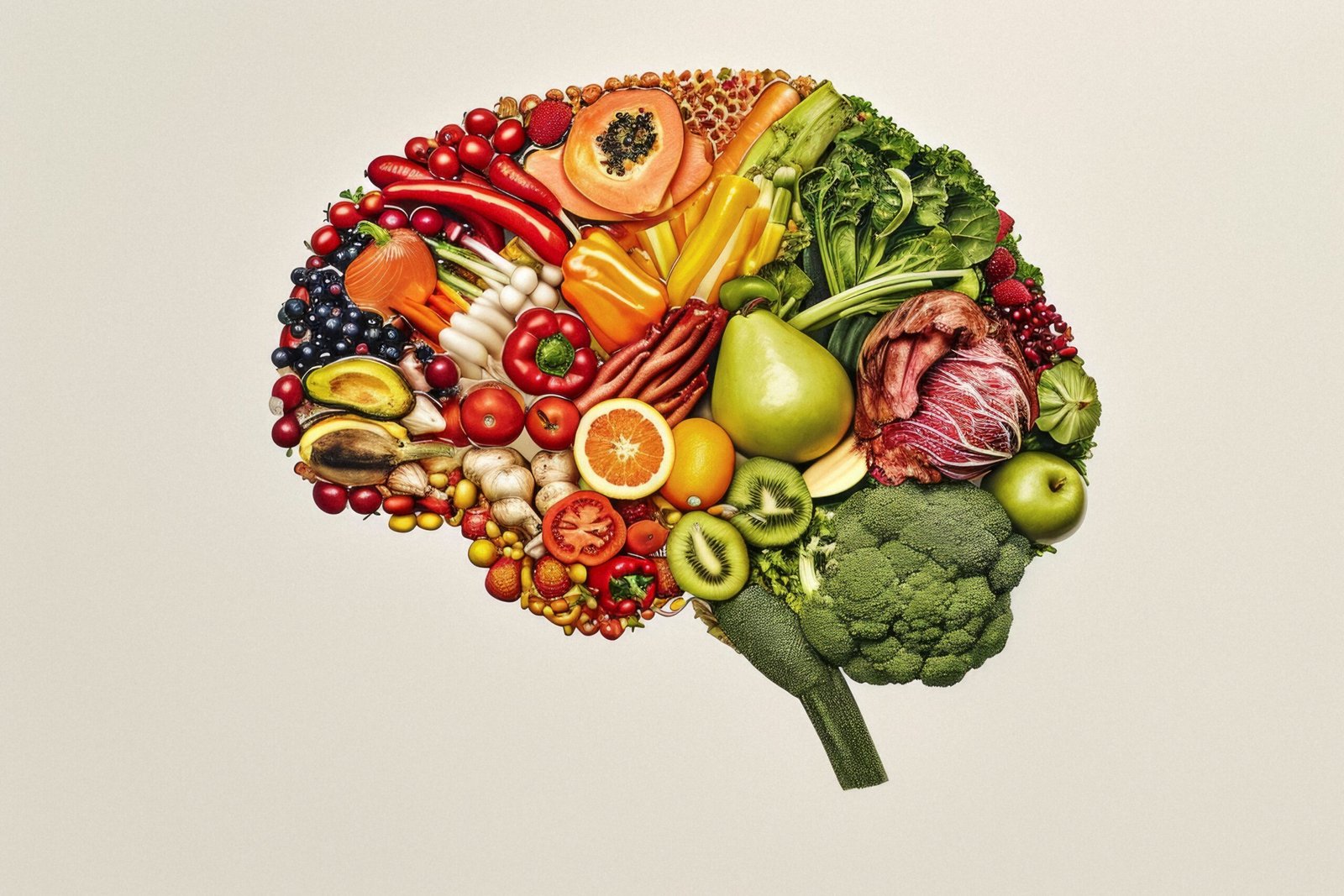
In the past few years, health powders have become the go-to solution for busy parents, gym-goers, and anyone trying to “be healthier” with less effort. Greens powders, superfood blends, protein isolates, vitamin mixes – they all promise the same thing: convenience, concentrated nutrition, and a quick fix for modern life. And it makes sense why people love them. You can scoop, shake, drink, and feel like you’ve done something good for your body.
But here’s the part most people never think about: powders don’t behave in the body the same way whole foods do.
Even when powders contain impressive ingredient lists, they often strip away the parts of food that matter most for long-term health – especially fibre, natural food structure, and the nutrient synergy that only exists in real plants. These are the components that keep you full, support the gut-brain axis, regulate appetite hormones like GLP-1, and stabilise your energy throughout the day.
This blog explores the real differences between powders and whole-food blends – how they digest, how they affect fullness, and what they actually do inside your body. The aim isn’t to shame powders (they absolutely have a place), but to help you understand where they fall short and how whole-food solutions fill the gaps powders can’t reach.
The Truth Behind the Label: Why powdered blends vary wildly – and what the evidence actually shows
Scientific reviews show that powdered nutrition blends can provide meaningful nutritional value , but they are also highly variable and come with limitations that stem from processing, formulation, and the loss of whole-food structure. Across commercially available powdered blends analysed in one study, the nutrient content varied dramatically from product to product, even when serving similar purposes. Protein content, for example, ranged from as low as 6.8 g per 100 g to as high as 70.6 g per 100 g, representing a tenfold difference within the same product category (1). Fibre ranged from 8.6 g to 46 g per 100 g, meaning all products were technically “high fibre,” but the actual level of fibre could differ nearly five times between powders (1). Vitamin C was the most inconsistent nutrient, ranging from 0.36 mg to 12.25 mg per 100 g, with heat-sensitive nutrients reduced significantly during drying and processing (1). This variability highlights one of the main challenges with powders: they are not nutritionally predictable, and what you get depends entirely on the exact formulation rather than the category as a whole.
A second study analysing a functional mix made from quinoa, amaranth, chia seeds, finger millet, milk solids, and spices shows that powders can be formulated to be nutrient dense when whole ingredients are used. This blend provided 21.5 g of protein, 5.01 g of fibre, 208 mg calcium, 9 mg iron, and 739 kcal per 100 g, demonstrating that powders can deliver substantial amounts of macro- and micronutrients (2). Its sensory rating of 8.9/9 shows that powders can also be palatable and well-accepted when well-designed (2). Both studies confirm key strengths of powders: they are convenient, shelf-stable, safe, and easy to integrate into daily routines. Their low water activity (typically 0.38 – 0.54) ensures excellent microbiological stability and long shelf life, and many include concentrated ingredients like plant proteins, polyphenols, and minerals that are valuable for supplementation (1).
That being said, this does not reflect the main type of powders in the market, which are typically protein isolates or diet shakes focused on delivering high protein but with little fibre – often <1-2g per serving – and substantially less plant diversity or intact food matrix. Most commercial powders in the supplement aisle use refined proteins (whey, casein, soy, pea) and add sugars, flavors, and extracts, sacrificing both fibre and nutrient synergy for convenience and concentrated protein delivery. While well-designed whole food-based mixes can provide nutrient density, the majority of powders available are “fibre-poor,” lack meaningful synergy, and cannot match the holistic nutrition or sustained satiety offered by functional blends made from real, diverse ingredients
Processing also alters the bioavailability of remaining nutrients compared to whole foods (1). Powders lose the natural plant matrix: intact fibres, cell walls, viscosity, and structural complexity that influence digestion rate, satiety, glycaemic control, and gut-hormone responses. The literature explicitly notes that powders have less nutrient synergy because isolated nutrients do not interact the way they do in whole-food forms (1). Even when fibre content is high, it is often isolated or powdered fibre rather than the structural, intact fibre found in fruits, seeds, or whole grains, meaning it may not produce the same digestive or microbiome effects.
How Processing Changes Fibre – And Why It Matters for Your Health
Scientific evidence shows that the way fibre is processed dramatically affects its nutritional power – especially its ability to support gut health, blood-sugar control, fullness signalling, and the production of beneficial short-chain fatty acids (SCFAs). Refining and milling remove fibre-rich bran and germ entirely, dropping fibre content from 10.7 g to just 2.7 g per 100 g, meaning many powdered blends start from a nutritionally “stripped” base. Even when fibre is retained, the structure of fibre matters: fine milling increases fermentability but removes the natural, intact grain matrix that slows digestion and supports stable blood sugar. High-shear processing and extrusion can degrade insoluble fibres and alter starch structure, weakening the slow-release effect whole grains naturally provide. Some processing steps, like enzymatic treatment or sprouting, can increase soluble and fermentable fibres (e.g., arabinoxylan-oligosaccharides), enhancing SCFA production – but these benefits are highly dependent on processing methods and are not guaranteed across commercial powders (3).
Why does this matter? Because intact whole-grain fibre supports lower risks of type 2 diabetes, cardiovascular disease, colorectal cancer, and improves microbiome resilience – benefits tied not just to how much fibre you consume, but the form it comes in. Soluble fibres (like β-glucans and arabinoxylans) increase viscosity, slow nutrient absorption, and support cholesterol lowering, while insoluble fibres maintain bowel regularity and reduce transit time. Over-processed fibre loses these physiological properties, making it less effective for gut-microbiome fermentation and reducing production of SCFAs such as butyrate, which fuels colon cells and modulates inflammation (3).
In short: fibre that has been heavily refined or structurally broken down may look good on a nutrition label – but it does not behave like the fibre found in whole or minimally processed foods.
The Synergy Effect: Why nutrients work better together – and why powders can’t recreate it
One of the most overlooked differences between whole-food blends and powdered supplements is nutrient synergy – the way vitamins, minerals, fibres, fats, and phytonutrients work together to create effects far greater than the sum of their parts. Modern nutrition science shows that nutrients rarely act alone. Instead, they rely on one another for absorption, transport, microbiome fermentation, metabolic signalling, and hormonal responses such as GLP-1 release. This phenomenon, often described as the “whole-food matrix effect,” is one reason whole foods consistently produce stronger and more reliable physiological outcomes than isolated nutrient powders, even when labels appear similar (4).
A 2023 review in Frontiers in Nutrition underscores this point, showing that whole foods outperform powders because their nutrients remain embedded within complex natural structures. These structures preserve cofactors, enzymes, fibre integrity, and polyphenol interactions – components that support everything from gut health to antioxidant defence. Powders, on the other hand, tend to isolate single compounds, strip away supportive elements, and simplify nutrients into forms that the body uses less efficiently (4).
This difference is clearly reflected in intervention studies. Combinations of B-vitamins lower homocysteine more effectively than any individual vitamin; calcium, vitamin D, and vitamin K together improve bone density more substantially than any single nutrient can; and whole eggs stimulate greater muscle protein synthesis than equivalent protein isolated from egg whites because of the additional micronutrients and intact matrix surrounding them. Even antioxidant protection is stronger when vitamin C and vitamin E are consumed together rather than separately. These findings collectively point to a simple but powerful truth: human physiology is designed for nutrients that arrive as part of a coordinated ensemble, not as isolated extras. While powders may list impressive nutrient values on paper, their simplified structures often fail to deliver the metabolic, microbiome, and hormonal benefits that intact whole foods provide (4).
The Fibre Powder Illusion: Why “Added Fibre” Isn’t the Same as Whole-Food Fibre
Fibre powders have been quickly gaining popularity, often promoted as simple shortcuts to better digestion, steadier blood sugar, and improved gut health. But the science shows that the type and structure of fibre matter just as much as the amount. And this is exactly where many fibre powders fall short.
Many commercial fibre powders rely on non-viscous soluble fibres such as inulin or oligofructose (from chicory root fibre), wheat dextrin, and partially hydrolysed guar gum (PHGG) – ingredients listed by the University of Florida’s Guide to Fiber Supplements as some of the most common fibres used in supplement products (5). These fibres dissolve easily, mix invisibly into drinks, and have no texture, making them convenient for manufacturers and consumers alike. But convenience comes at a cost: because these fibres do not form gels or increase viscosity in the gut, they lack the structural properties required to slow digestion, moderate postprandial glucose, or support the metabolic and hormonal benefits linked to intact or gel-forming fibres.
This difference has been demonstrated for decades. In a landmark 1978 glucose-tolerance study, volunteers consumed glucose with and without the addition of native guar gum – a naturally viscous, gel-forming fibre. The viscous form significantly reduced post-meal glucose and insulin spikes, while the hydrolysed, non-viscous form (similar to the PHGG used in many powders today) had no effect at all. The metabolic response mapped directly onto viscosity: the more gel-forming the fibre, the greater the benefit (r = 0.926) (6).
Modern clinical trials reinforce this. Only viscous, gel-forming fibres (such as psyllium, high–molecular-weight β-glucan, and raw guar gum) consistently improve fasting glucose, insulin, and long-term markers like HbA1c in people with metabolic syndrome and type 2 diabetes. Non-viscous, highly processed fibres do not produce these effects because they cannot create the gel network that slows nutrient absorption and modulates gut-brain signalling (6).
Furthermore, another key limitation of fibre powders is not just their lack of structural viscosity – but their lack of diversity and naturally bound phytochemicals. Many powders contain only 1-2 purified fibre types, while whole foods contain dozens of chemically distinct fibres, each feeding different microbial species (7). Research makes clear that gut bacteria rely on specific fibre structures because each species possesses unique enzymatic capacities. A 2021 narrative review notes that “the class of dietary fiber influences the composition of the gut microbiota because not all bacterial species have the same capacity to produce the enzymes needed for its degradation,” meaning that low diversity in fibre intake → low diversity in microbial populations (8). Large-scale human data reinforce this: the American Gut Project found that people who consumed 30 or more different plant types per week had markedly higher microbial diversity than those consuming 10 or fewer – demonstrating that variety, not just fibre grams, is what drives a resilient microbiome (9).
Whole foods also provide something fibre powders simply cannot: non-extractable polyphenols bound to the fibre matrix. These polyphenols – often lost during drying, grinding, or extraction – remain tightly attached to cell-wall fibres in fruits, vegetables, legumes, and whole grains (10). They travel intact to the colon, where gut microbes release them during fermentation, converting them into beneficial metabolites and enhancing short-chain fatty acid (SCFA) production. This polyphenol–fibre co-fermentation is a major reason whole foods exert stronger prebiotic, anti-inflammatory, and metabolic effects than isolated fibre powders. A 2022 review further shows that diverse fibres + diverse polyphenols foster a broader range of beneficial taxa such as Bifidobacterium and Faecalibacterium, while fibre-poor or fibre-simplified diets contribute to the erosion of microbial diversity linked to modern metabolic diseases (11).
In short: whole-food blends provide 20 – 30+ distinct fibre types plus naturally bound polyphenols, feeding a wider range of microbes and producing richer SCFA profiles than fibre powders, which typically offer only a fraction of this complexity. This makes whole-food fibre not just “more natural,” but biologically superior for supporting microbiome diversity, fermentation dynamics, and long-term metabolic health.
Where Frinks® Fit In: Whole-food function, preserved structure, real nutrient interaction
FiiHii’s Frinks® are designed around this scientific understanding, preserving the natural nutrient interactions that powders tend to lose. Rather than relying on isolated ingredients, each Frink brings together nutrients that inherently support and enhance one another. This approach mirrors the way nutrients occur in nature and reflects the synergistic logic the evidence consistently supports.
Each Frink isn’t just a list of ingredients – it’s a synergistic combination of nutrients that amplify each other’s effects:
- Vitamin C enhances plant-iron absorption in Orchard, Summer Love, P-Power, and Traffic Light Punch.
- Healthy fats boost uptake of fat-soluble vitamins (A, E, K) in Cocomangofango and The God Yoghurt.
- Polyphenols + fibre improve microbiome diversity in Orchard, Traffic Light Punch, and Cocomangofango.
- Omega-3s + antioxidants reduce inflammation synergistically in P-Power and Traffic Light Punch.
- Minerals (calcium, magnesium) pair with vitamin D pathways in Summer Love and Orchard.
- B6 + magnesium support stress resilience in The God Yoghurt Frink.
These combinations mirror the same whole-food synergy that modern research emphasises – but in a quick, accessible format that still preserves the natural nutrient matrix (unlike most powdered products).
The Bottom Line: Convenient Nutrition Should Still Behave Like Real Food
Powders have earned their popularity for good reason: they’re quick, portable, long-lasting, and can deliver concentrated amounts of certain nutrients with minimal effort. But even the best powders face limitations that come from the way they’re made. Processing alters plant structure, reduces key vitamins, and separates nutrients that are meant to work together, which means the body may not respond to them the way it responds to real food. What looks impressive on a label doesn’t always translate into the same metabolic, digestive, or hormonal effects.
Whole foods, on the other hand, come with intact fibres, natural matrices, and nutrient combinations that support digestion, satiety, glycaemic control, microbial diversity, and overall metabolic balance. These aren’t small differences, they’re the physiological advantages people are actually looking for when they reach for nutrition support.
The real opportunity isn’t choosing between convenience or whole-food function. It’s recognising that modern life needs both. Powders fill gaps, but whole-food structures fuel deeper nourishment. Frinks® were created to bridge that divide: to offer the ease and speed of a scoopable blend, while preserving the synergistic, intact-nutrient benefits of real plants.
In a world where time is limited and health still matters, the future isn’t about abandoning convenience – it’s about upgrading it.
Get real food here –Buy Now!!
References
- Doykina P, Mihaylova D, Popova A, Dimitrova-Dimova M. Technological characteristics and nutritional value of powdered functional mixes. InBIO Web of Conferences 2024 (Vol. 102, p. 01012). EDP Sciences.
- Sindhu PB, Ravindra U. Functional Food Mix and its Quality Assessment. Mysore Journal of Agricultural Sciences. 2023 Jul 1;57(3).
- Seal CJ, Courtin CM, Venema K, De Vries J. Health benefits of whole grain: Effects on dietary carbohydrate quality, the gut microbiome, and consequences of processing. Comprehensive Reviews in Food Science and Food Safety. 2021 May;20(3):2742-68.
- Townsend JR, Kirby TO, Sapp PA, Gonzalez AM, Marshall TM, Esposito R. Nutrient synergy: Definition, evidence, and future directions. Frontiers in Nutrition. 2023 Oct 12;10:1279925.
- Dahl WJ. Guide to Fiber Supplements. EDIS. 2011;FS162. doi:10.32473/edis-fs162-2011.
- McRorie JW. Evidence-based approach to fiber supplements and clinically meaningful health benefits. Nutrition Today. 2015;50(2):82–89. doi:10.1097/NT.0000000000000082.
- Cleveland Clinic. How do I choose the best fiber supplement? Cleveland Clinic Health Essentials. 2023. Available from: https://health.clevelandclinic.org/best-fiber-supplements. Accessed 23 Nov 2025.
- Abreu y Abreu AT, Milke-García MP, Argüello-Arévalo GA, Calderón-de la Barca AM, Carmona-Sánchez RI, Consuelo-Sánchez A, et al. Dietary fiber and the microbiota: A narrative review by a group of experts from the Asociación Mexicana de Gastroenterología. Revista de Gastroenterología de México (English Edition). 2021;86(3):287–304. doi:10.1016/j.rgmxen.2021.02.002.
- McDonald D, Hyde E, Debelius JW, Morton JT, Gonzalez A, Ackermann G, et al. American Gut: An open platform for citizen science microbiome research. mSystems. 2018;3(3). doi:10.1128/mSystems.00031-18.
- Fu J, Zheng Y, Gao Y, Xu W. Dietary fiber intake and gut microbiota in human health. Microorganisms. 2022;10(12):2507. doi:10.3390/microorganisms10122507.
- Fernandes A, Mateus N, de Freitas V. Polyphenol–dietary fiber conjugates from fruits and vegetables: Nature and biological fate in a food and nutrition perspective. Foods. 2023;12(5):1052. doi:10.3390/foods12051052.